
History
East New Market
Attractions

Building
Permits

Town
Committee

Payment
options
A Brief History of
EAST NEW MARKET
Nestled within the farm fields of northern Dorchester County, six miles northeast of Cambridge lies the historic village of East New Market. For thousands of years, Native Americans made this land their home. During the second half of the 17th century, East New Market was settled on the North-South Choptank Indian Trail. (c.1660)
By the early 19th century, the town was renamed “East New Market” (1827) to distinguish it from “New Market” in Frederick County Maryland. By the mid 1850’s, Samuel Green, a free black man that was born into slavery in Dorchester County, had become a highly respected lay preacher at The Colored People’s Methodist Episcopal Church in East New Market. Now known as Faith Community United Methodist Church, this place of worship is still an active congregation today. Samuel Green is worthy of mention as he was arrested and jailed for possession of Uncle Tom’s Cabin in 1852. When studied, this case explores freedom of speech and freedom of the press in a slave state in pre-civil war America. Another hometown hero is Thomas Holliday Hicks, who was the Governor of Maryland during the outbreak of the Civil War (1858-1862). Born near East New Market in Dorchester County, Governor Hicks played a critical role in preventing Maryland from joining the Confederacy.
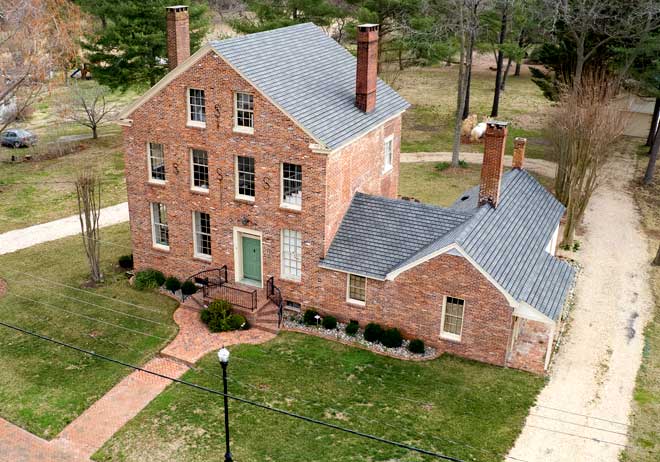
By the middle of the nineteenth century in 1868, the Dorchester and Delaware Railroad line opened just due east of town allowing East New Market to become an economic center. The town was bustling and thriving with a bank, a hotel, and the construction of more homes, some of which still stand today – Smith Cottage (c.1825) and The New Market House (c.1850) as examples. Just after the turn of the twentieth century, in 1935, the Emerson Harrington Bridge was built connecting Dorchester and Talbot counties from Cambridge to Trappe. The once bustling village of East New Market then became a “fly in amber” as the towns growth came to a screeching halt. The large and stately homes sat vacant or were passed down through generations. In 1975, a committee was formed to save the historic homes and preserve the town’s history, resulting in East New Market becoming the first municipality in Dorchester County to be placed on the National Register of Historic Places. The Maryland Historic Trust names seventy six buildings in East New Market on their register of homes built between the late eighteenth century and 1930. Three of these buildings have been restored and rehabilitated and are in continual use for the town’s residents. The Trading Post, built in 1840, is now the town museum. The old East New Market School, built in 1912, is now a senior apartment home. And the newly renovated Town Municipal Building, built in 1913, was once Millenson’s Department Store and later the home of the East New Market Fire Department.
As East New Market Continues to thrive, it has been a witness to all aspects of the birth of our nation, from the time of the Native Americans, through the expansion of Colonial America and the plight of African Americans through the tumultuous years of Civil War. The small-town values have remained strong as the Nation’s history is preserved through civic pride, respect, and reflection. The stately mansions still stand, and our streets and neighborhoods are named after those who have come before us. The historic village of East New Market stands rooted in the past and looking towards the future while honoring our Nations heritage.
News & Upcoming Events
Historic Trading Post Museum
2026
Location:
10 Academy Street
East New Market
2026 Events
2026
Location:
Various Locations
Community Luncheon
2026
Location:
East New Market